Criobiopsia endobronchiale / ricanalizzazione

Tumore che ostruisce le vie aeree centrali

  • Anche combinando diverse tecniche di prelievo (pinze, spazzolino, aghi, ecc.), non è possibile raggiungere la resa diagnostica ottenibile con la sola criobiopsia nelle lesioni endobronchiali.

  • Fino al 91% dei casi, è possibile ripristinare la pervietà delle vie aeree riducendo il volume di un tumore endobronchiale con la crioricanalizzazione, anche in pazienti che non tollerano una FiO₂ più bassa.

  • A differenza di altre tecniche bioptiche, con la criobiopsia broncoscopica è possibile aumentare il tasso di rilevamento delle mutazioni attivate dell’EGFR nel carcinoma polmonare non a piccole cellule (NSCLC).

  • In termini di sicurezza, la criotecnologia è superiore al laser nella terapia broncoscopica dei tumori endobronchiali.

  • L’eventuale emorragia post-crioricanalizzazione, può essere trattata mediante Coagulazione ad Argon-Plasma (APC)..

  • L’emostasi con l’APC risulta efficace anche in corrispondenza di aree difficilmente raggiungibili o dei margini tumorali.

  • La tecnica APC in broncoscopia presenta un profilo di sicurezza favorevole ed una curva di apprendimento più rapida, rispetto alle applicazioni laser.

Video clinici

Endobronchial cryobiopsies with the 2.4 mm single-use probe
Removal of a lung tumor with monopolar snare, flexible single-use cryoprobe and APC
Recanalization with 1.7mm single-use cryoprobe
Indications for endobronchial cryobiopsy & cryotherapy
Contraindications for endobronchial cryobiopsy & cryotherapy
Bleeding management for endobronchial cryobiopsy & cryotherapy
How to mitigate perforation risk when performing endobronchial cryoextraction?
Recanalization of endobronchial tumor with APC 2

Informazioni scientifiche

Summary of publication

Hetzel J, et al: Cryobiopsy increases the diagnostic yield of endobronchial biopsy: a multicentre trial. Eur Respir J. 2012 Mar;39(3):685-90.


In this randomized multicenter study, the authors compared cryobiopsy and conventional forceps sampling for diagnosis of endobronchial malignancies. 281 patients were randomized to receive endobronchial biopsies with forceps, and 282 had biopsies performed with a flexible cryoprobe. After obtaining biopsy samples, a blinded histological evaluation was performed. A definitive diagnosis was achieved in significantly more patients who underwent cryobiopsy (95.0%) than in those randomized to conventional forceps biopsy (85.1%, p<0.001), even though there was no difference in the incidence of significant bleeding. The authors concluded that ‘Endobronchial cryobiopsy is a safe technique with superior diagnostic yield in comparison with conventional forceps biopsy.’
 

Consulta lo studio

Summary of publication

Ehab A, et al: Cryobiopsy versus forceps biopsy in endobronchial lesions, diagnostic yield and safety. Adv Respir Med. 2017;85(6):301-306.
 

This study aimed to evaluate the safety and diagnostic yield of cryobiopsy compared with forceps biopsy in endobronchial lesions. Two forceps biopsies and one cryobiopsy (reusable cryoprobe, 2.4mm) were taken from the same patient in a randomized sequence. Samples obtained with cryobiopsy were significantly larger than those obtained with forceps biopsy (5.9mm ± 2.3 vs 2.5mm ± 0.8, p = 0.001). The diagnostic yield of cryobiopsy was significantly higher than that with forceps biopsy (74.5% versus 51.1%, p = 0.001). Mild and moderate grades of bleeding were reported in both techniques, with no significant difference and no severe bleeding. The authors concluded that ‘Cryobiopsy represents a safe and effective tool to obtain larger tissue samples of good quality, with higher diagnostic yield in comparison to standard forceps samples. However, bleeding occurred more frequently after cryobiopsy than with forceps biopsy, but without severe adverse effects.’
 

Consulta lo studio

Prodotti per questo intervento

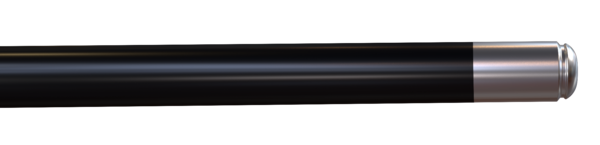
Close-up of the tip of a flexible cryoprobe with a diameter of 2.4 mm for pulmonary procedures

N. 20402-411

Criosonda flessibile monouso, Ø 2,4 mm, lunghezza 1.150 mm

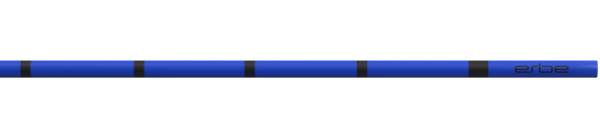
Close-up of the tip of a flexible cryoprobe with a diameter of 1.7 mm for pulmonary procedures

N. 20402-410

Criosonda flessibile monouso, ø 1,7 mm, lunghezza 1150 mm

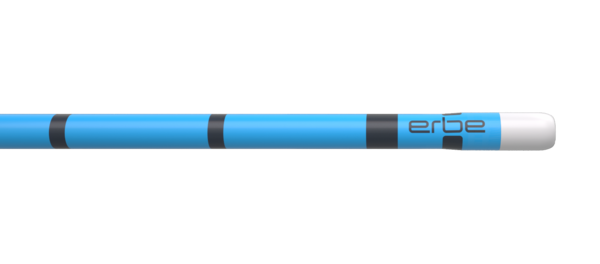
Close-up of the tip of a flexible cryoprobe with a diameter of 1.1 mm for pulmonary procedures

N. 20402-401

Criosonda flessibile monouso, ø 1,1 mm, lunghezza 1150 mm, con guaina protettiva, lunghezza 817 mm, con guaina protettiva ø 2,6 mm

Ulteriori informazioni sul prodotto


  • Il 92% dei vostri colleghi conferma che la criosonda con guaina protettiva può sostituire le pinze da biopsia.
  • La guaina protettiva protegge il broncoscopio dall’influenza termica delle criosonde (1,1 mm) durante il prelievo bioptico.
  • La guaina protettiva atraumatica consente di eseguire una biopsia rapida con una criosonda da 1,1 mm attraverso il broncoscopio.
  • Una volta estratta la guaina protettiva, l’aspirazione rimane costantemente attiva grazie a una guarnizione integrata nell’adattatore.
  • ERBECRYO® 2 può essere integrato con unità dell’elettrochirurgia e APC su un carrello.