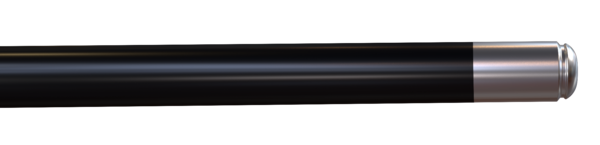
Criobiopsia transbronchiale

Malattie polmonari interstiziali

  • La criobiopsia transbronchiale risulta superiore alla biopsia transbronchiale con pinza in termini di resa diagnostica, nei casi di polmonite interstiziale idiopatica e di malattia polmonare interstiziale con causa nota o associazione nota.

  • La criosonda da 1,1 mm e la guaina protettiva consentono di estrarre il materiale bioptico attraverso il canale operativo di un broncoscopio terapeutico (canale operativo da 2,8 mm).

  • La criobiopsia transbronchiale è sicura ed efficace per la diagnosi del rigetto dell’allotrapianto polmonare.

Video clinici

Transbronchial cryobiopsy with single-use cryoprobe
Sampling of peripheral lung nodules with cryo – ERS Congress 2021
Mediastinal cryobiopsy for lymphadenopathy – ERS Congress 2021
Transbronchial cryobiopsy with rigid intubation for ILD diagnosis using flexible single-use cryoprobe and ERBECRYO® 2
Removal of a lung tumor with monopolar snare, flexible single-use cryoprobe and APC

Informazioni scientifiche

Medical insights ePaper

Transbronchial cryobiopsy for the diagnosis of interstitial lung diseases (ILDs). Current procedural guidance for interventional bronchoscopists according to the literature.
 

For idiopathic pulmonary fibrosis (IPF) and fibrotic hypersensitivity pneumonitis, recommendations have been made for TBCB over SLB. A lack of procedural standardization and high degree of interobserver variability between different institutions make it difficult to recommend TBCB over SLB in general. To this end, common questions on the application of Erbe flexible cryoprobes as an indispensable part of TBCB need to be addressed.
 

Consulta l’e-Paper

Medical insights ePaper

Transbronchial lung cryobiopsy (TBLC) for diagnosis of interstitial lung diseases (ILD). COLDICE study results and latest CHEST guidelines
 

Surgical lung biopsy (SLB) until now has been the gold standard recommended in different guidelines but is associated with significant morbidity, with complications including postoperative pneumothorax, pneumonia and respiratory failure, as well as significant mortality, indicated at 1.7 %. Given these risks and the often detrimental state of suspected ILD patients, reported SLB rates in ILD are lower than estimated necessary and in 2016 reached only 8 % in Europe. Consequently, transbronchial lung cryobiopsy (TBLC), a minimal invasive technique allowing biopsy without major surgery, is increasingly used in diagnosis of ILD. The COLDICE study (Cryobiopsy versus Open Lung biopsy in the Diagnosis of Interstitial lung disease) has addressed both approaches.
 

Consulta l’e-Paper

Medical insights ePaper

Transbronchial cryobiopsy for sampling of mediastinal lesions. Evaluation of transbronchial needle aspiration and the flexible single-use 1.1mm cryoprobe for sampling of mediastinal lesions
 

In their present publication Transbronchial mediastinal cryobiopsy in the diagnosis of mediastinal lesions: a randomised trial, the working groups from Thoraxklinik Heidelberg, Germany and Third Military Medical University Chongqing, People's Republic of China, assess the safety and efficacy of linear EBUS-guided transbronchial mediastinal cryobiopsy.
 

Leggi l’e-Paper

Medical insights podcast

Prof. Venerino Poletti, head of the Department of Respiratory and Chest Diseases at the Ospedale G.B. Morgagni in Forli and Dr. Hari Kishan Gonuguntla, lead consultant Interventional Pulmonologist at the Yashoda Hospital in Secunderabad: Transbronchial cryobiopsy of mediastinal lymph nodes
 

Both currently recommend transbronchial mediastinal cryobiopsy to any bronchoscopist who has experience and confidence in performing the EBUS-TBNA. In cases of granulomatous and lymphoproliferative diseases, the features of biopsy specimens procured using this technique can prove to have advantages over those provided by needle biopsy. Dr. Hari Kishan: „My pathologist's reaction to this first samples, especially when it comes to malignant nodes or metastatic disease. They'll be more happy because size is a very big advantage here. We definitely get more samples than the conventional needles, but we have to see being TB endemic country how this technology evolves.“ Prof. Poletti: „I think that cryotechnology is used to avoid bleeding or to control bleeding. We have bleeding when we have biopsy in the peripheral of the lung, because you tear the bronchial artery or the pulmonary veins or the pulmonary artery, but in the mediastinal lesions. First of all, you can control the best colorization by ultrasound and then usually biopsy, not in area where you have large vessels. I think it's very easy to have a very low rate of bleeding in this context.“
 

Ascolta il podcast

Prodotti per questo intervento

Close-up of the tip of a flexible cryoprobe with a diameter of 2.4 mm for pulmonary procedures

N. 20402-411

Criosonda flessibile monouso, Ø 2,4 mm, lunghezza 1.150 mm

Close-up of the tip of a flexible cryoprobe with a diameter of 1.7 mm for pulmonary procedures

N. 20402-410

Criosonda flessibile monouso, ø 1,7 mm, lunghezza 1150 mm

Close-up of the tip of a flexible cryoprobe with a diameter of 1.1 mm for pulmonary procedures

N. 20402-401

Criosonda flessibile monouso, ø 1,1 mm, lunghezza 1150 mm, con guaina protettiva, lunghezza 817 mm, con guaina protettiva ø 2,6 mm

Ulteriori informazioni sul PRODOTTO


  • Le criosonde monouso garantiscono prestazioni costanti e migliorano la riproducibilità, grazie a effetti uniformi sul tessuto bersaglio.

  • È possibile controllare il posizionamento delle criosonde monouso tramite immagini radiologiche.

  • Il timer fornisce un feedback visivo e acustico relativo al tempo di congelamento.