Ripristino della pervietà delle vie aeree

Stenosi benigna delle vie aeree centrali

  • Il rischio di perforazione e di stenosi tardiva è praticamente inesistente con la criodevitalizzazione.

  • La criobiopsia endobronchiale della mucosa fornisce un contenuto maggiore di tessuto sottomucoso, ghiandole e muscolatura liscia, oltre a una migliore conservazione della morfologia epiteliale rispetto alle biopsie con pinza.

  • Gli effetti della crioterapia sulla microcircolazione comprendono vasocostrizione, danno endoteliale e aggregazione piastrinica; questi fattori portano alla formazione di microtrombi e alla conseguente necrosi.

  • Le criobiopsie della mucosa endobronchiale possono essere eseguite in regime ambulatoriale.

  • La tecnica APC in broncoscopia presenta un profilo di sicurezza favorevole ed una curva di apprendimento più rapida, rispetto alle applicazioni laser.

Informazioni scientifiche

Summary of publication

Inaty, Hanine et al: Unimodality and Multimodality Cryodebridement for Airway Obstruction. A Single-Center Experience with Safety and Efficacy. Annals of the American Thoracic Society 13 (6), S. 856–861.


This retrospective study reports effective and safe use of flexible cryoprobe (reusable, 2.4mm) for airway recanalization in 156 patients with malignant (n=88) and benign (n=68) airway obstruction. Cases of benign airway obstruction included blood clots (n=11), mucus plugs (n=1), granulation tissue (n=40), and benign tumors (n=6). Cryorecanalization achieved bronchoscopic airway patency in 95% of patients. For those with benign airway obstruction, complete or partial airway patency was accomplished in 56 (82%) and 9 (13%) of 68 patients, respectively. Improvement in symptoms occurred in 118 (82%) of 144 symptomatic patients. Serious complications were reported in 17 patients (11%) and included respiratory distress, severe bleeding, airway injury, and hemodynamic instability. The authors concluded that “Cryodebridement, when used alone or in combination with other endoscopic treatment modalities, appears to be safe and effective in treating endoluminal airway obstruction.”


Consulta lo studio

Summary of publication

Jung, Ye-Ryung et al: Recurred Post-intubation Tracheal Stenosis Treated with Bronchoscopic Cryotherapy. In: Internal medicine (Tokyo, Japan) 55 (22), S. 3331–3335.
 

This case reports on a 42-year-old woman with recurring post-intubation tracheal stenosis that was successfully treated with bronchoscopic cryotherapy (reusable, 2.4mm). She had a history of endotracheal intubation for three weeks, after which she experienced postintubation tracheal stenosis so that tracheal resection with end-to-end anastomosis was performed. Three weeks after the operation, recurrent tracheal stenosis was recognized that had formed as web-like fibrosis above the previous anastomosis site in the upper trachea. As her general condition was unfavorable for repeat surgery, cryotherapy with flexible bronchoscopy was performed. The patient experienced no immediate complications and after one month, airway patency was consistently well maintained and the patient was stable without dyspnea, stridor, or wheezing. Tracheal CT taken two years after cryotherapy showed no further stenosis at the old lesion site. The authors concluded that “Cryotherapy can be considered as an alternative or primary treatment for post-intubation tracheal stenosis”.
 

Consulta lo studio

Prodotti per questo intervento

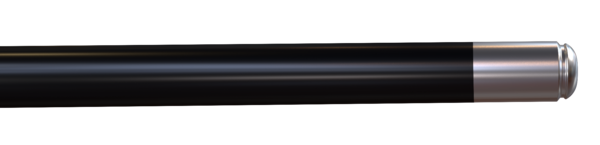
Close-up of the tip of a flexible cryoprobe with a diameter of 2.4 mm for pulmonary procedures

N. 20402-411

Criosonda flessibile monouso, Ø 2,4 mm, lunghezza 1.150 mm

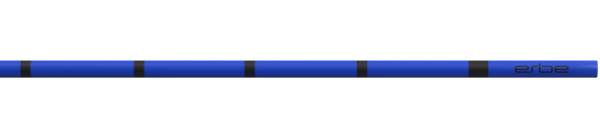
Close-up of the tip of a flexible cryoprobe with a diameter of 1.7 mm for pulmonary procedures

N. 20402-410

Criosonda flessibile monouso, ø 1,7 mm, lunghezza 1150 mm

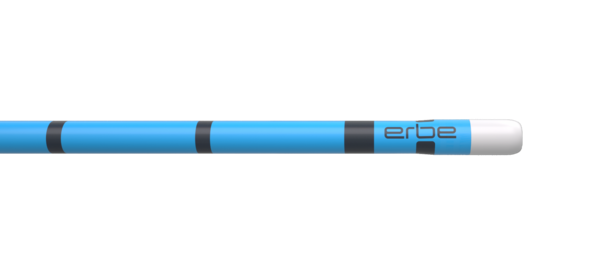
Close-up of the tip of a flexible cryoprobe with a diameter of 1.1 mm for pulmonary procedures

N. 20402-401

Criosonda flessibile monouso, ø 1,1 mm, lunghezza 1150 mm, con guaina protettiva, lunghezza 817 mm, con guaina protettiva ø 2,6 mm

Ulteriori informazioni sul PRODOTTO


  • La sonda da 2,4 mm offre l'area di congelamento più ampia tra tutte le criosonde monouso